Every Second Matters. So Does Every Training Session.
Every year, thousands of lives depend on one crucial factor: how quickly and effectively CPR is performed. When a cardiac emergency happens, there is no time to hesitate or rely only on what was learned during a training session. The quality of CPR delivered in those first few minutes can make a life-saving difference.
This is why CPR training has always been an essential part of emergency care. But as healthcare continues to evolve and expectations for clinical skills grow, an important question is being asked by healthcare professionals, educators, trainers, and organizations alike:
Is traditional CPR training enough to prepare people for real-world emergencies?
Conventional CPR training provides the knowledge and hands-on practice needed to understand the basics. However, it does not always indicate whether a learner is truly ready to respond with confidence and accuracy in a real emergency. As the focus of healthcare education shifts toward competency, measurable outcomes, and immersive learning experiences, the way we think about CPR training is changing.
Here RescueSim, powered by
Allreal, is helping shape the future of CPR education.
By combining immersive simulation with real time performance insights, it enables learners, trainers, healthcare professionals, and organizations to build confidence, assess performance, and improve CPR readiness in a more meaningful way.
Why Healthcare Education Is Evolving
Healthcare education has undergone a significant transformation over the past decade. As patient care becomes more complex and clinical standards continue to advance, the focus has shifted beyond simply completing mandatory training. The goal today is to help learners develop practical skills, make informed decisions under pressure, and demonstrate real competency.
One of the biggest drivers of this change is simulation-based learning. By creating safe and controlled environments, simulation allows learners to practice clinical procedures, learn from their mistakes, and build confidence before applying those skills in real patient care.
RescueSim shift is particularly important for CPR education.
Delivering high-quality CPR is about much more than knowing the correct steps. It requires the right compression depth, an appropriate compression rate, accurate hand placement, quick decision-making, and the confidence to act without hesitation. These are skills that are strengthened through repeated practice, realistic scenarios, and meaningful feedback rather than classroom learning alone.
The Challenges of Conventional CPR Training
Traditional CPR training has helped millions of healthcare professionals, first responders, and learners develop the knowledge and skills needed to respond during emergencies. It remains a vital part of emergency preparedness and continues to serve as the foundation of CPR education.
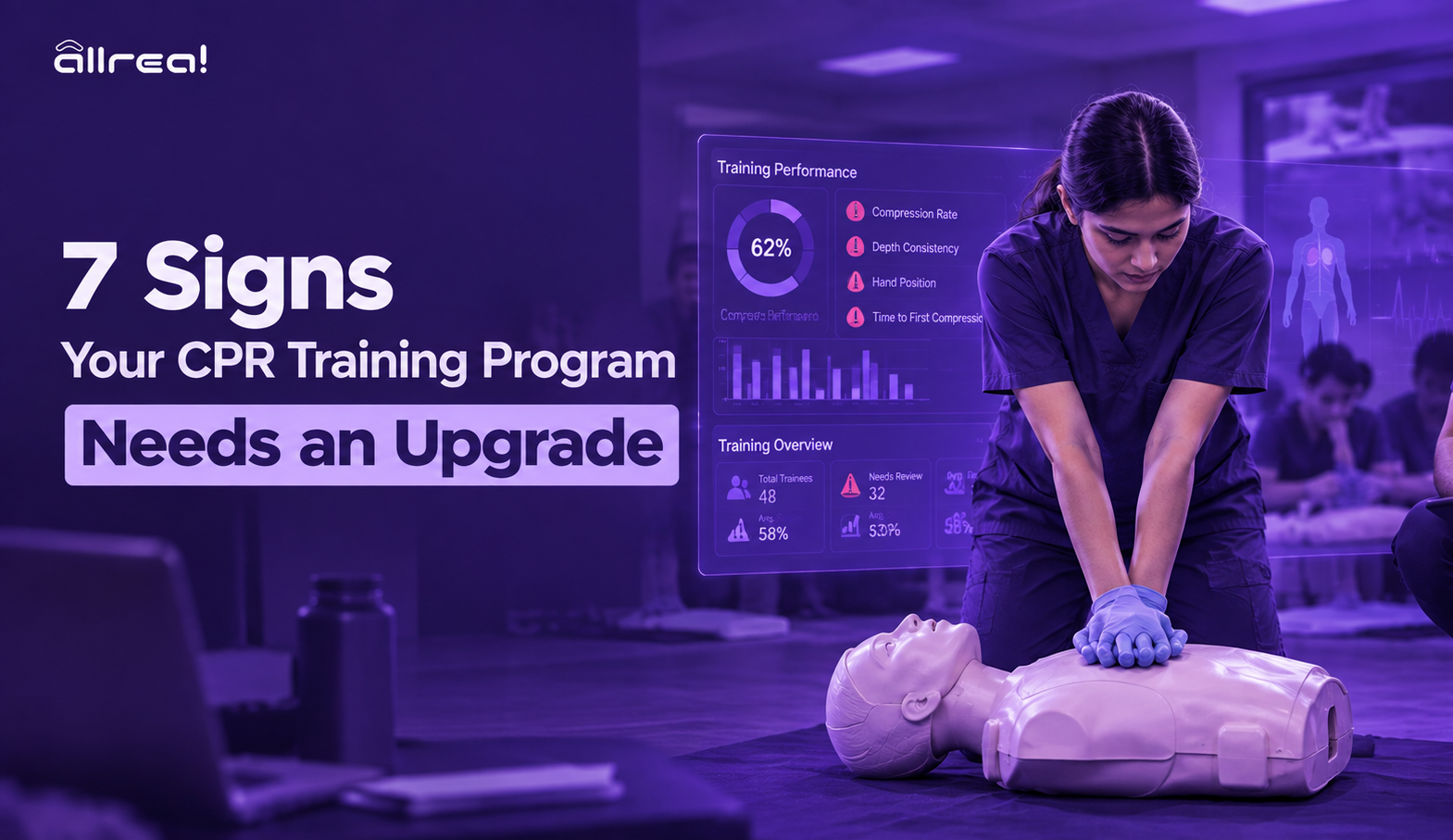
However, many training programs still rely heavily on instructor observation and manual assessment to evaluate performance. While experienced instructors offer valuable guidance and feedback, it can be difficult to objectively measure how well each learner performs. As a result, important questions often remain unanswered.
· Were the chest compressions deep enough?
· Was the compression rate maintained consistently?
· Was full chest recoil achieved after each compression?
· How quickly did the learner begin CPR?
· Has the learner improved over multiple training sessions?
Without accurate performance data, it becomes challenging to measure competency, identify areas for improvement, and track progress over time. This can make it harder for learners, trainers, and organizations to understand whether CPR skills are truly improving and whether they are ready to respond confidently in a real emergency.
Beyond CPR Training
Learning CPR is not simply about completing a course or earning a certification. It is about developing the confidence and practical skills to respond effectively when a real emergency occurs. Immersive simulation plays a key role in bridging the gap between theory and practice.
By placing learners in realistic emergency scenarios and providing objective feedback, technology helps reinforce correct techniques, improve decision-making, and strengthen skill retention over time. This approach creates a more meaningful learning experience where every training session contributes to measurable improvement rather than routine completion.
How RescueSim Powered by Allreal is advancing CPR Training
RescueSim, powered by
Allreal, is designed to enhance CPR educaion by combining immersive technology with objective performance assessment. It builds on traditional training methods, making learning more engaging, measurable, and effective.
Instead of replacing existing CPR programs, RescueSim complements them by providing realistic simulation experiences and actionable performance insights. This enables learners to practice with greater confidence while giving trainers and educators a clearer understanding of each learner’s progress.
The RescueSim portfolio includes two solutions, each designed to support different training needs and learning environments.
RescueSim XR
By Allreal